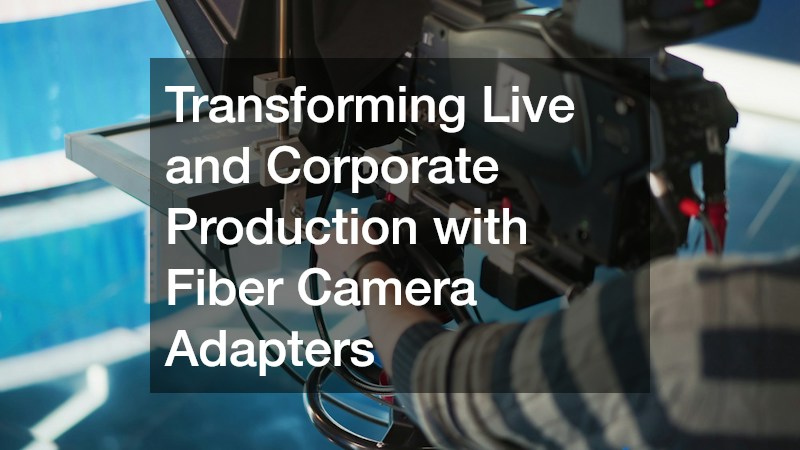

The convergence of traditional broadcast engineering and high-end professional audiovisual environments has rapidly accelerated. Enterprise facilities, houses of worship, and live event venues are transitioning away from basic webcam-style streams to cinematic, high-resolution multi-camera workflows. Achieving this cinematic visual quality, however, introduces serious infrastructure challenges. Transmitting uncompressed 4K and 8K video, bi-directional audio, tally, intercom, and camera telemetry across substantial distances quickly exceeds the physical capabilities of copper cabling.
To overcome these distance limitations and the complexity of multi-cable runs, modern production teams increasingly rely on fiber camera adapters. By consolidating all essential signals into a single durable optical run, these systems turn standalone cinema, ENG, or studio cameras into fully integrated broadcast chains.
Solving Long-Distance Transmission and Signal Integrity
Copper connections such as 12G-SDI and HDMI suffer from steep signal degradation and high susceptibility to electromagnetic interference (EMI) when cable lengths exceed a few dozen feet. In large corporate auditoriums, sprawling sports arenas, or outdoor concert stages, running separate thick bundles of coax, XLR audio, and Ethernet for each camera angle is physically impractical, prone to interference, and labor-intensive to strike and deploy.
Optical transport circumvents these barriers entirely. Advanced fiber camera adapters convert multiple high-bandwidth digital and analog signals at the camera rig into light pulses. This design allows uncompressed video feeds—from 1080p up to 12G 4K and 8K—to travel thousands of feet over lightweight fiber optic cable with near-zero latency and no signal loss. The immune nature of glass optical fibers shields sensitive live camera feeds from noisy electrical environments common in industrial plants, convention halls, and stages with high-power distribution.
Streamlining Multi-Signal Transport in Corporate and Live Environments
Modern multi-camera workflows demand far more than a one-way video feed. Camera operators need clear return video monitors to frame shots, two-way intercom to communicate with technical directors, genlock synchronization for switcher integration, tally indicators, and serial or IP data for remote shading and color painting.
Integrating fiber camera adapters consolidates these disparate lines into an all-in-one “cameraback” unit. Rather than dragging an umbilical cord of six separate cables across an auditorium floor:
- Video Feeds: Bidirectional transmission delivers both the main high-resolution camera output and return feeds back to the operator’s viewfinder or confidence monitor.
- Comms & Audio: Mic/line-level inputs, program audio earpieces, and multi-channel 2-wire/4-wire intercom systems route through the same connection.
- Control and Power: Remote Camera Control Unit (CCU) telemetry, VISCA/RS-422 data, and gigabit Ethernet pass seamlessly. When using hybrid SMPTE cables, integrated power supplies can even energize the camera and mounted accessories directly from the control room base station, eliminating the need to swap field batteries during extended keynote presentations or live corporate broadcasts.
Bridging Cinema Quality with Broadcast Flexibility
A major shift in live corporate events, worship services, and sports is the widespread adoption of large-format digital cinema cameras from brands like Sony, Canon, RED, and ARRI. While these cameras deliver rich color science, shallow depth of field, and filmic visual texture, they typically lack native studio connectivity and tally/intercom integration.
Modular fiber camera adapters effectively bridge this divide. They attach directly to standard battery mounts (such as Gold Mount or V-Mount) between the camera and power source, adapting cinema rigs into full studio camera chains without cumbersome external rig boxes. Base stations at the control desk or production flypack demultiplex the optical signal into standard broadcast outputs, giving technical directors immediate remote control over camera iris, shutter, white balance, and tally in real time. This modularity means production crews can deploy their existing cinema equipment for a commercial video shoot one day and effortlessly slot it into a multi-camera live broadcast the next.
Modernize Your Production Workflow
Building a scalable, reliable live production system requires optical transport hardware that withstands demanding field conditions while delivering pristine signal fidelity. As an industry pioneer in video and optical transmission, MultiDyne offers market-leading fiber solutions—including the flagship SilverBack series—engineered to adapt to your camera of choice for seamless broadcast, corporate, and live-streaming workflows.
Ready to eliminate cable clutter and elevate your multi-camera broadcasts? Connect with MultiDyne today to explore custom fiber transport solutions and discover the right system to power your next live production.